


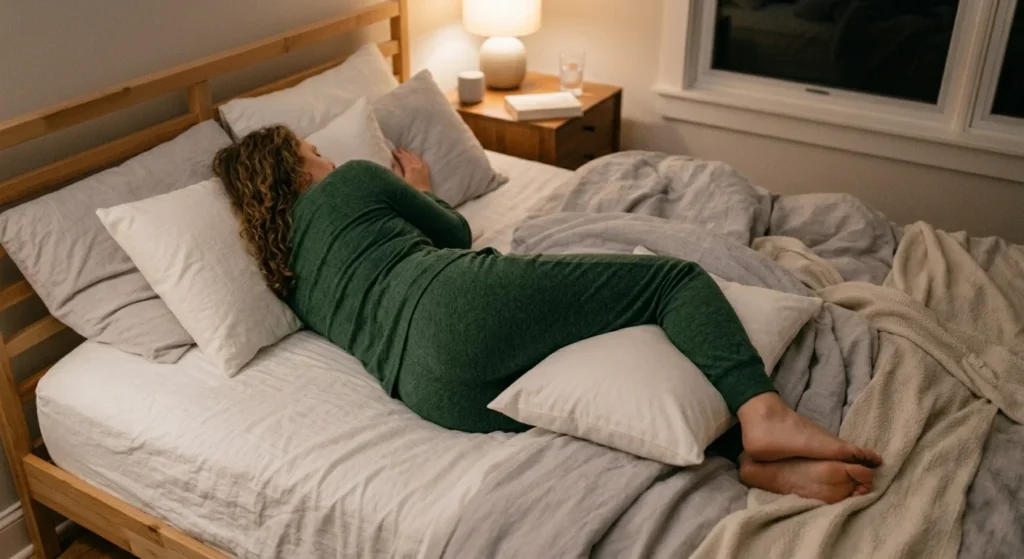
Sleep on your side with a pillow between your knees. If that doesn’t suit you, sleep on your back with a pillow under your knees. Stay away from your stomach if you can. That’s the advice you’ll get from most physical therapists and spine specialists, and it’s a sensible place to start.
What most articles on this topic leave out is how thin the research behind it is. The recommendations make physical sense, but nobody has run a big trial proving one position beats the others. So treat everything below as a well-reasoned starting point that you test on your own back for a couple of weeks, not a prescription.
Side sleeping with a pillow between your knees
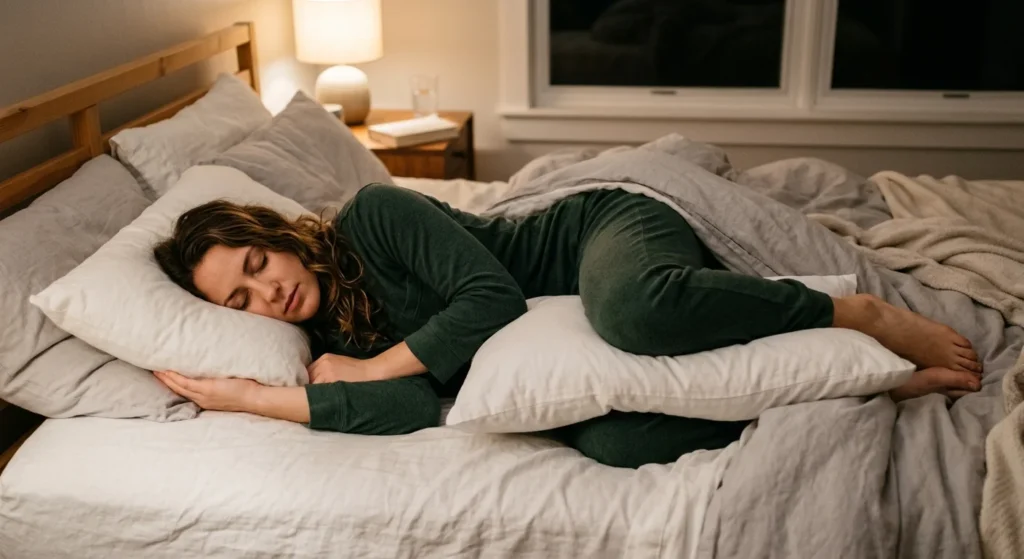
This is the position most often recommended, and the pillow is the whole point. When you lie on your side without anything between your legs, your top leg drops forward and pulls the pelvis with it, which twists the lower spine for hours. A review summarized by GoodRx found that side-lying with pillows may help prevent or reduce low back pain, and that side-lying without a pillow between the legs can make it worse because of that twisting.
A few details make the setup work better:
- Keep your knees slightly bent, not pulled up high.
- Use a pillow thick enough to keep your knees level with your hips. If your top knee still sags, the pillow is too thin.
- Look at the gap between your waist and the mattress. If you can slide a hand through easily, a small folded towel or thin pillow there can stop the spine from sagging sideways. This step-by-step guide covers the same setup.
- Switch sides now and then. The same guide points out that always sleeping on one side can create its own imbalance.
If your pain is on one side, try both. Some people find lying on the painful side unbearable, and others find it’s the only side that works.
Back sleeping with a pillow under your knees
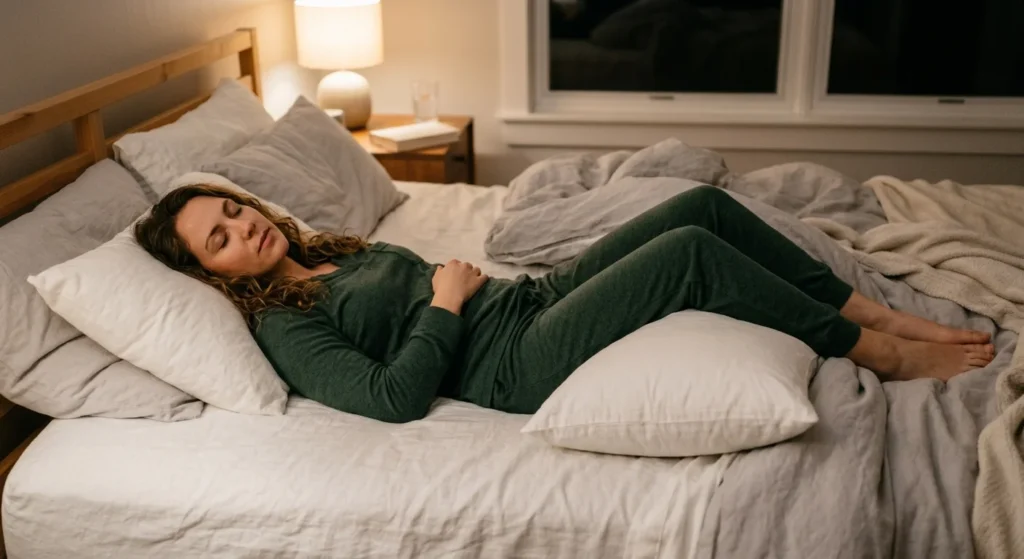
Lying flat on your back with your legs straight can pull the lower spine into a stronger arch than it likes. Raising your knees on a pillow takes some of that tension off, which is why this is the usual second choice.
The honest caveat is that the research here is mixed. GoodRx’s summary of the evidence says exactly that about this position. A spine surgeon at the Texas Back Institute, Dr. Peter Derman, describes the literature on sleep position as sparse and not fully consistent. Side sleeping looks protective in some studies, and back or stomach sleeping may raise the odds of back pain, possibly because of the load on the small joints at the back of the spine. He also points to a study where a combination worked well: side sleeping with a pillow between the legs, and back sleeping with a pillow under the knees.
That combination matters because you don’t stay in one position all night anyway. It’s worth setting up for both, with a pillow you can use under or between your knees depending on where you end up.
If you want extra support when lying on your back, a small rolled towel under the curve of your lower back helps some people. Others find it makes things worse, so try it for a night before committing.
The fetal position
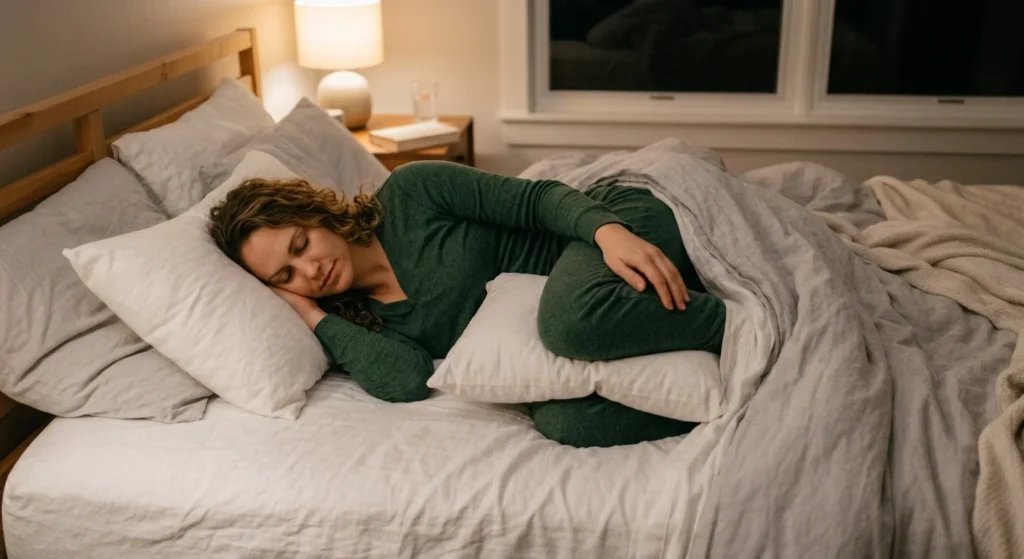
A loose curl on your side, knees bent toward your chest with a pillow under your head, is common advice for people whose pain eases when the spine flexes forward. Some people with disc-related pain find it more comfortable than anything else.
Don’t curl up tightly. Pulling your knees all the way to your chest and rounding your back for hours can leave you stiff in the morning. A gentle curl with a pillow between the knees keeps most of the benefit.
Stomach sleeping
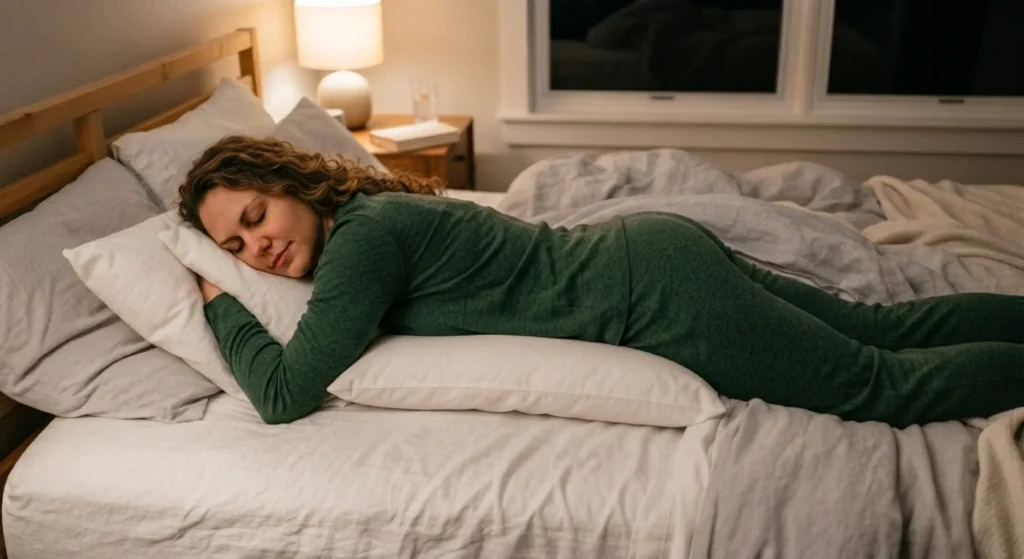
This is the one position almost everyone agrees is hardest on the lower back. With your belly down, the hips sink into the mattress and the lumbar spine arches backward for the whole night.
Switching is hard when you’ve slept this way for decades. If you can’t, the usual workaround is a pillow under your pelvis and lower abdomen to ease the arch. It isn’t ideal, but it’s better than sleeping flat. Some people manage to shift gradually by starting the night on their side with a pillow hugged against their chest, so there’s something to stop them rolling forward.
Does your mattress matter?
Somewhat, but less than the mattress industry would like you to believe.
For years the standard advice was to buy a very firm mattress. A well-known 2003 trial of 313 adults with chronic non-specific low back pain, published in The Lancet, tested that. People were randomly given either a firm or a medium-firm mattress for 90 days, and the medium-firm group did better. A summary on WikiMSK adds a detail that gets overlooked: more than 70 percent of people improved no matter which mattress they got, and the same page describes the wider evidence on mattresses as limited and often inconclusive.
So a medium-firm mattress is a reasonable choice if you’re shopping, but replacing a decent mattress won’t fix a back problem by itself. The GoodRx piece linked earlier makes a similar point, that there’s no single best mattress or pillow for everyone with back pain, and Spine-health has a longer rundown of the mattress studies if you want to read them. If your mattress is old and sagging, a new one is more likely to help. If it’s fine, put the money into a couple of pillows first.
How to test what works for you
Pick one setup and stay with it for about two weeks before judging it. Changing everything every night makes it impossible to tell what’s helping. A reasonable order:
- Start with a pillow between your knees on your side, or under your knees on your back.
- Notice how your back feels when you get up, not at 2 a.m. Morning stiffness tells you more than how comfortable you felt falling asleep.
- Adjust one thing at a time: pillow thickness, a waist towel, which side you lie on.
- If one position consistently wakes you with more pain, drop it, whatever the guides say.
Pain that’s worse in bed and eases once you’re moving around is a different pattern from pain that’s worst after activity, and it’s worth mentioning to whoever treats you.
When to stop experimenting and see a doctor
Pillows won’t help if something else is going on. Get checked promptly if your back pain comes with numbness or weakness in a leg, trouble controlling your bladder or bowels, fever, unexplained weight loss, or if it started after a fall or injury. Pain that wakes you at night regardless of position, or that hasn’t improved after several weeks of sensible changes, is also worth a proper assessment. This article is general information, not a diagnosis.
FAQs
What is the best sleeping position for lower back pain?
Side sleeping with a pillow between slightly bent knees is the most commonly recommended. Back sleeping with a pillow under the knees is the usual alternative. The evidence for either is modest, so what matters most is finding the one that leaves you least sore in the morning.
Is it bad to sleep on your back with lower back pain?
Not necessarily. Lying flat with straight legs can aggravate some people’s pain, which is why a pillow under the knees is suggested. Research on whether this helps is mixed.
Why does side sleeping hurt my lower back?
Usually because the top leg is dropping forward and twisting the pelvis. A pillow between the knees and a small support at the waist often fixes it.
Should I sleep with a pillow under my lower back?
Some people find a small rolled towel under the lumbar curve helpful when lying on their back, and others find it uncomfortable. Try it for a few nights and keep it only if you wake up better.
Is a firm mattress better for back pain?
Not according to the best-known trial, where medium-firm beat firm over 90 days. Individual preference and sleeping position also matter.
How long should I try a new sleeping position?
About two weeks. Judge it by how your back feels when you wake up, not by whether the first night felt strange.
